Tuesday, November 20, 2012

Slogging through "Sam's Journals" (or, somebody shoot me)


"Careening down Sugarloaf's famed Narrow Gauge Trail, downhill ski racer Sam Morse drops 2430 vertical feet in a little over a minute. The 16-year-old reaches speeds in excess of 60 mph on the mile-and-a-half-long World Cup downhill course. Sam’s parents, coaches, and teammates support his pursuit of podium gold... so does his writing." 

I'm still wading my way through this article. Yet again for the 1000th time, I've discovered that writing is hard. Duh x 1000.

On the plane ride out to Las Vegas last week, after pounding away on the article for 15+- hours, I stopped mid-sentence and decided--because I didn't have a %$#@ clue what I was doing--I had to think in a more linear way. So, I constructed an outline. I can't believe I created a quasi-traditional outline... Usually, I have a list of topics and go from there. But this outline (and as you'll see below, it's a list with Roman numerals, Duh x 1001) seems to have gotten me off the dime.

It's not that I didn't know what I was doing in the article. It's just that I hadn't discovered what the data (i.e., interviews and writing) was saying. Sometimes, we have to live our writing to the point of utter bewilderment before a tiny speck of light begins to twinkle on the computer screen's page. Duh x 1002.


I Introduction
           
1       Pix of Sam racing
2     Glimpse of CVA (Bode, others … check with Chip/website)

II Sam through his teacher’s and coach’s lens

1.     Mary Poulin
2.     Chip Cochran

III Athletes’ Journals

1.     Definitions
2.     Glimpse at Serena Williams’ journal
3.     Carlos Delgado’s AJ
4.     David Chamberlain
5.     Primary focus of AJ is sport (While the primary focus of an Athlete’s Journal is sport, other areas of the athlete’s life find their way into the journal. P 6/CB article) *

IV Writing to Learn

1.     Zinsser
2.     Murray
3.     What SM said
4.     What Charlie B. said
5.     What the BMA athletes as a collective said
6.     How do athletes learn? (Chart)

V Modes of Writing

1.     Expressive
2.     Transactional
3.     Poetic
4.     Examples from journals

VI The Psychological

1.     Benefits of AJs
2.     WOB connections

VII Sam’s First Journals

1.     Story of ski trips
2.     Story of agreement between Kingfield ES and Morse family
3.     Examples and explanations

VIII Sam’s Recent AJs

1.     Examples
2.     Evidence of expressive writing
3.     Evidence of writing to learn
4.     What these examples reveal (questions for Sam)

IX What we learn from Sam’s writing

1.     What makes an effective coach for you?
2.      

X Summary


Saturday, November 10, 2012

Quick Write for IAA Magazine


One key to pitching ideas and books is to continually reach out to potential readership. A week ago I presented at the fall conference of the Maine Interscholastic Athletic Administrators Association. From that experience I was asked to write a short article for the national AD magazine. Here's a draft for IAA Magazine's “AD’s Clipboard”: 

"Learning with Athletic Team Notebooks & Journals"
by Richard Kent, Ph.D.

 “Writing organizes and clarifies our thoughts. Writing is how we think our way into a subject and make it our own. Writing enables us to find out what we know—and what we don’t know—about whatever we’re trying to learn.”                                 
––William Zinsser, Writing to Learn

Whether on the playing fields or in the classroom, writing is a powerful way to learn. Athletic Team Notebooks and Journals can enhance communication and amplify learning by providing athletes with space to analyze, reflect, and note-take. The idea of using writing as a way to learn in athletics is not new. From Olympians to middle schoolers, athletes use writing to guide training, motivate, and analyze performance.

What’s a Team Notebook?
Writing in Team Notebooks helps guide athletes to think more deeply about their performances and the team’s. The basic Team Notebook has five sections that include prompts to help players analyze their practice sessions and competitions:
–Preseason Thoughts… the prompts on this page help athletes think about the previous season and the upcoming season.
–Competition Analysis I… the prompts on this page help athletes reflect on a competition.
–Competition Analysis II… the prompts on this page assist athletes in analyzing a competition that they watch.
–Postseason Thoughts… the prompts on this page guide athletes in thinking about the past season while making plans for the future.
–Notes & Journals… these pages provide athletes with a place to keep notes and sketch plays. This section may also include a variety of journal prompts to assist athletes in thinking more broadly about their sport and their lives beyond athletics.

What’s an Athlete’s Journal?
An Athlete’s Journal provides a place to set goals, grapple with issues, keep track of training ideas, and record results. These journals may stand-alone or be a part of a Team Notebook. Research suggests that writing benefits athletes by reducing stress and anxiety, increasing self-awareness, sharpening mental skills, and strengthening coping abilities. Writing in journals or notebooks helps athletes look back and think forward. Here are several model journal prompts for athletes:
––Who brings out the best in you as an athlete and why? You might first think of a coach, manager, or trainer, but also think about family members, fans, teammates, or even an opponent.
–– Tell the story of your proudest moment as an athlete that is not about winning a competition.
–– Write about this quotation from basketball legend Michael Jordan:
“I've missed more than 9000 shots in my career. I've lost almost 300 games. 26 times, I've been trusted to take the game winning shot and missed. I've failed over and over and over again in my life. And that is why I succeed.”
–– When you were young, whom did you admire as an athlete and why?
–– Write a letter to one of your former coaches. You may wish to include some of the following: what you’re doing now as an athlete; this coach’s contributions to your athletic and personal life; the issues you currently face as an athlete; a fun memory; and a photo. Send this letter.
–– Why can this statement be true: “Some days, playing poorly is the most important result that could happen.” Give examples from your own experiences as an athlete.
–– After a competition, write a note to an opponent. Highlight the athlete’s strengths or weaknesses, and feel free to offer some advice. (Not to be sent.)
––How do you cope with anxiety or nervousness before a competition?
––Describe your most humiliating day as an athlete.

For more information and models of Athletic Team Notebooks and Journals, visit the resource Website WritingAthletes.com.
***
Richard Kent, PhD, is professor at the University of Maine and director of the Maine Writing Project. He has authored ten books, including The Athlete’s Workbook: A Season of Sport & Reflection and the Soccer Team Notebook (with Amy Edwards, Gonzaga University). He may be reached at his resource Website: WritingAthletes.com

Sunday, November 4, 2012

Sam's Journals

Sam Morse, GS training, Austria, Fall 2012


I've started an article about Sam Morse, a ski athlete at Carrabassett Valley Academy in Kingfield. Sam's English teacher, Mary Poulin, called my attention to Sam and his writing. A prolific journaler, Sam has been writing about his skiing since the age of 7. I've enjoyed two interviews with the 16-year-old downhill ski racer and have spent hours examining his journals. Now, it's time to write....

Sam with a few of his journals.


Sam and his English teacher Mary Poulin

Saturday, October 27, 2012

An Indian Summer Day in Weld

To see the full album, click on the picture above. This will take you to my Facebook album. 

Wednesday, October 24, 2012

The times of our lives ... when we write.

The National Day on Writing this past Friday showcased the many ways we all write. In my post on Facebook, I shared that I write email, marginal notes in articles and books, blog posts, articles, and books. Kim, one of my colleagues in the Maine Writing Project, posted the following powerful piece:

"Today I delivered a eulogy I wrote this past week for an amazing man I loved dearly. At  the service I asked all those present to write as well. Many wrote a memory of this good man. I write what needs to be written." 

This past weekend, we celebrated my brother Allen's 70th birthday in San Antonio, Texas. We also gathered 20 years ago to celebrate his 50th. We see these gatherings as a celebration of Allen, but also of our family, our parents, and those who are coming after us.

In tribute to her father, my niece Julia asked her dad's siblings to write a memory and share a photo. Today, she sent us glimpses of the final product that she shared with her dad last evening in the Bay Area. I can only imagine how moved my brother must have been with the writing and photographs, this gift that his daughter so thoughtfully created.

Writing is ... powerful, passionate, wild & wicked, stressful, clichéd, inviting, happy & gloomy, raucous & gentle, snappy or drawn out, revised, fresh ...

And so very often, writing is love.

Remember to click on the photos to enlarge. 


Tuesday, October 23, 2012

Happy 70th Birthday, Allen!

We gathered in San Antonio over the weekend to celebrate Allen's 70th birthday and, of course, what we believe to be the 20th anniversary of The Kent Open Golf Tournament. Good food, plenty of laughs, and not too much political talk....

The Kent Clan.... the first time we've all been together in 10 years
Earlier on in the week, I gave my sister a hair cut on the 9th floor balcony of her condo overlooking the River Walk. The Texas winds swept away the wisps of hair. Since 2006, Barbara has worn a lot of different hair styles, including "my look." She accepts the endless changes in her body with grace and endures the chemo the only way she knows how: she takes it and keeps on moving. Determined to watch as much of her kids' and grandkids' lives as possible, she's also plain old smitten with her Ken. They're worth this fight.

My sistah and her favorite brotha! ;-)


Tuesday, October 9, 2012

Back from the mountaintop: Writing Resources

Here's a collection of writing resources for both teachers of writing and writers. Click on this photo to access the site.  

Monday, October 8, 2012

Hiking the Black & White Trail in Rumford


We headed out to Black Mountain today to find the new Black/White trail cut by the Maine Conservation Corps that connects Black Mountain to Whitecap. My plan was to find B/W, poke around a bit looking for a view of Whitecap, and then head home. That didn't happen.
Remember, click on photos to enlarge. 

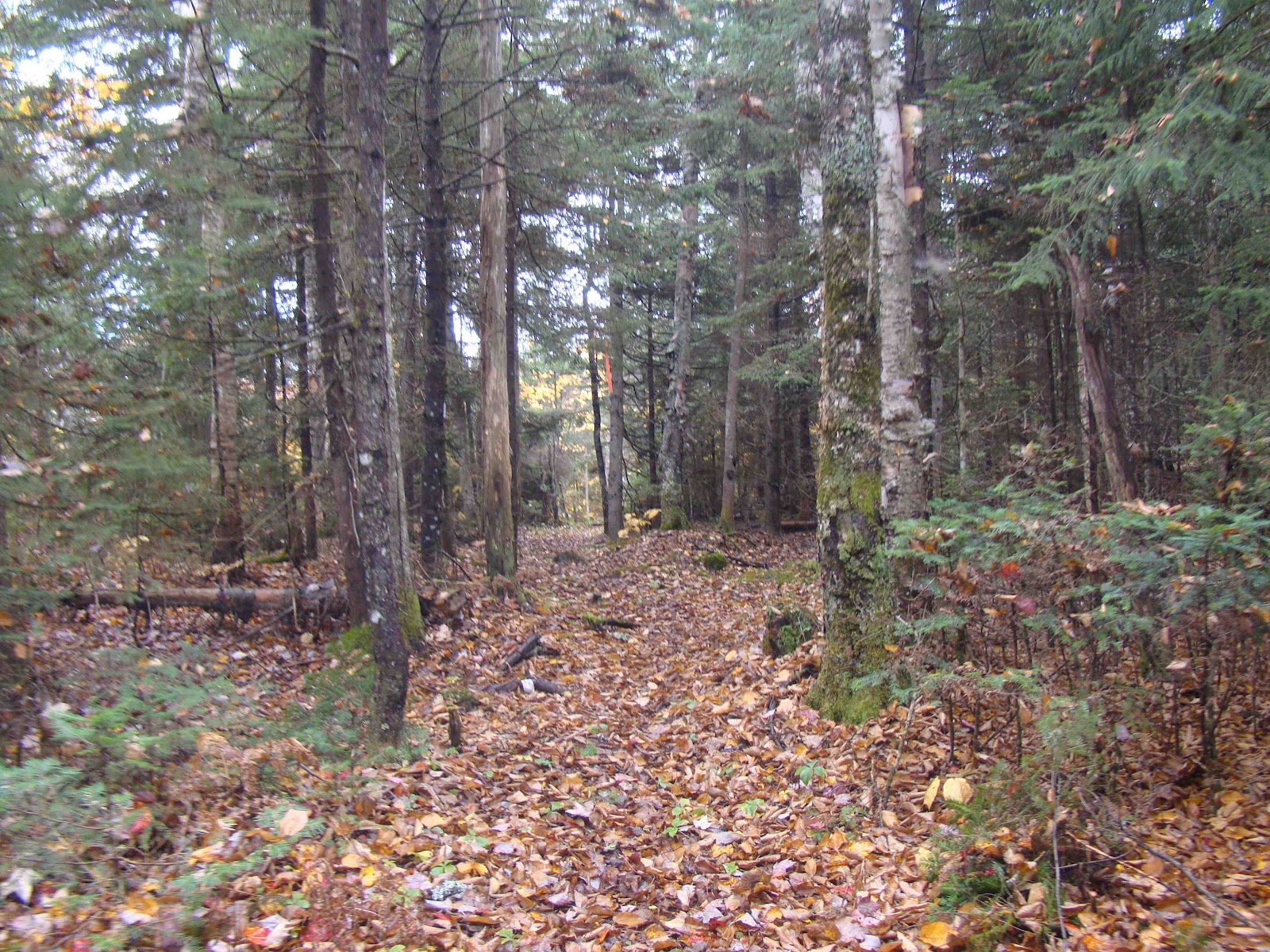
We hiked BMOM's Woods Trail up onto the old Expert Trail to the top of the new chairlift. Just beyond the chair on the right, there's a small swamp with an orange ribbon in the distance. This marks the trail head that connects BMOM to the Black-White.

This section of the trail winds up to one of the towers that can be seen from the base of the mountain. Just beyond the tower, white hash marks and an orange ribbon mark B/W's trail head.

The first half mile of B/W winds around the top of Black Mountain to the left and then dips toward the valley. The woods changes from a pine forrest to an old hardwood stand. The trail is gentle, well marked, and switches back and forth down to the valley's floor with a few glimpses of Whitecap in the distance. It took about 80 minutes to hike from Black Mountain's parking lot to the valley floor between the two mountains. There, I found a dirt road and a helicopter landing zone (yup). Clearly marked, the B/W Whitecap trail crosses a small stream and then gradually climbs toward the left.
Small swamp at the top of the chair where the trail begins. 

I read in a recent Rumford Times article by Cherri Holland Crockett that B/W connects on the front side of Whitecap, a trail I've seen earlier in the year. About 20 minutes up the back side of Whitecap, we started traversing to the left. We went another 20 minutes of gentle hiking around the belly of Whitecap. Looking at the time of day, I decided to turn around. It took about 3:30 for us to do that loop. It's only a guess, but I think the full loop--BMOM parking lot to top of Whitecap and back--may take 5.5 hours of steady hiking. Again, that's a guess.

November hiking will offer more views of Whitecap from the back side of Black Mountain. And one thing is for sure, after years of looking from the top of Whitecap over toward Black Mountain and wondering if you can get there from here... well, you can... thanks to the Conservation Corps' work in cutting the Black-White Trail.
TV/Radio Tower at top of BMOM 
Black-White trail head at top of Black Mountain
B/W winds around the top of Black Mountain. 

Old hardwood stand back side of BM. 

View of Whitecap from the back side of Black Mountain


Staircase on the first section of B/W Whitecap
Bailey hears a crow that sounds not unlike a dog barking. 

Perplexed.
I'm calling these mushrooms "Ladder 'shrooms."
Top of Black Mountain on the Black-White Trail.


Heading down BMOM

Friday, October 5, 2012

Ah, the final beach cigar.

We arrived at Burt's Point for a run at about 4pm after hiking Four Ponds in Rangeley. Temperature: 72 degrees. Cousin Ian is spending his last weekend on the point and, looking at the weekend weather report of rain, this Friday evening was probably Ian's last on the beach for 2012. Ah, the final beach cigar.


Byron Notch, Fall 2008
     

Hiking Four Ponds and Finding Those Words

Who knew? For decades I've driven up through the Height of Land to Rangeley. At the scenic turnoff, there's a quintessential Maine view of Mooselookmeguntic Lake. About one quarter of a mile before the turnout is a gravel road on the right marked with a partially-built rock wall. This deteriorating road winds up through the rolling western mountains. Bailey and I hiked down several ATV trails on the left to Long Pond, one of the Four Ponds (actually, I read here there are six named ponds and a bog).        
View from the Height of Land––October 5, 2012

Down one trail, we found a cluster of boats, a rustic, backwoods marina. These boats are owned by true fishermen--I suspect they come to this rural outpost for the quiet, their friends, and the fishing. Long Pond has several cabins on the shores but no electricity. It sounds cliché, but Four Ponds is a hidden gem. Next up for us will be a hike of the AT from the Height of Land across to Four Ponds.

While on this hike and leaf-peeping tour that ended with a 40-minute run in Weld, I thought of a new writing project to undertake and worked through several others that are percolating. Although I know that "The writer is the one who stays in the room" (Ron Carlson), it's not news that sometimes you have to get out from behind your computer screen and leave your room to find those words.
Remember to click on the photos to enlarge!